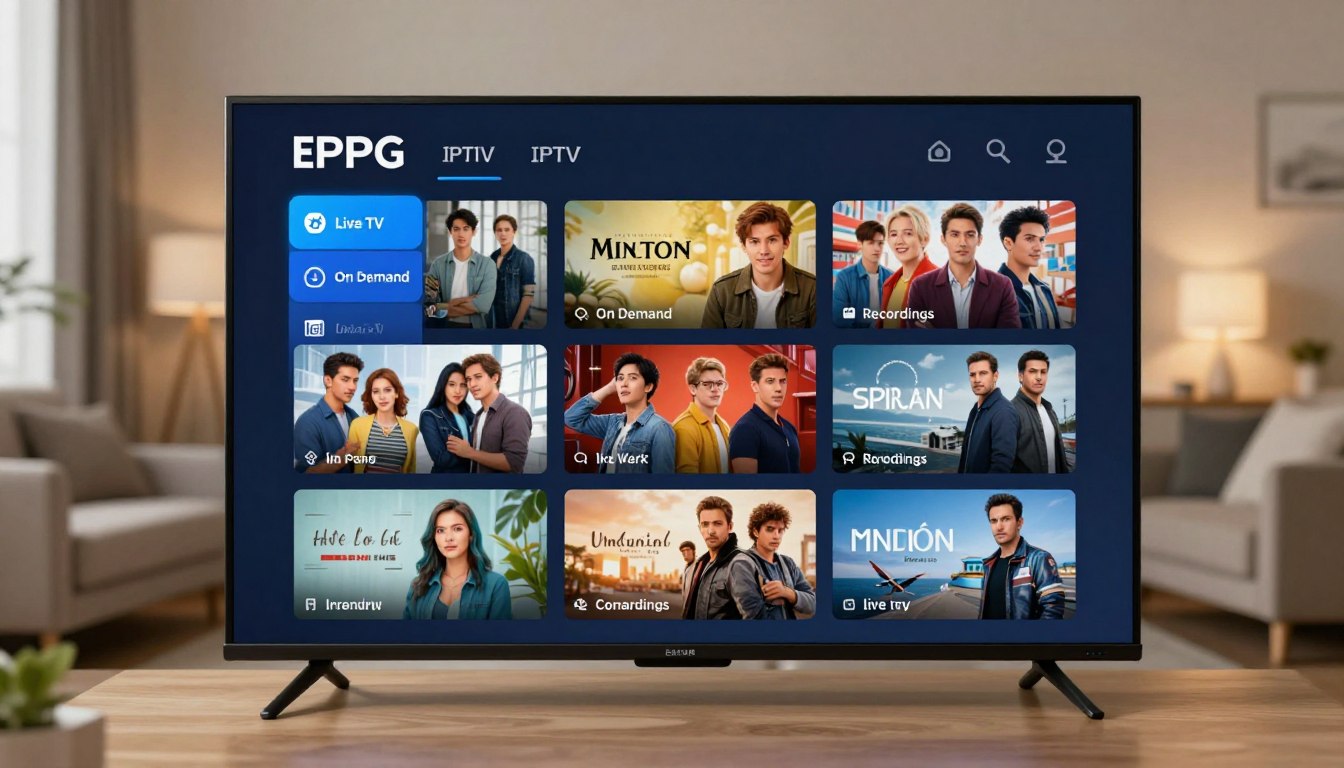
Modern television has evolved significantly, moving away from static aerial signals to dynamic digital streaming. At the heart of this transformation is the EPG on IPTV, a digital tool that helps viewers navigate vast libraries of entertainment with ease.
Think of this feature as your personal assistant for your television. It organises broadcast schedules into an interactive format, allowing you to browse programmes, check show times, and plan your evening viewing effortlessly.
For households across the United Kingdom, this technology is essential for a seamless viewing experience. By providing a clear, visual layout of available content, the EPG on IPTV ensures you never miss your favourite series or live sporting events.
Key Takeaways
- The guide acts as a digital interface for modern streaming services.
- It helps users organise and discover new programmes quickly.
- Viewers can easily plan their viewing schedules in advance.
- This technology is vital for a smooth experience in the UK.
- It transforms traditional broadcast data into an interactive format.
Understanding the Basics of EPG on IPTV
Modern households rely on sophisticated tools to manage their viewing habits, and the EPG on IPTV is at the heart of this experience. It serves as the primary interface for discovering content across hundreds of available channels.

Defining the Electronic Programme Guide
At its core, an Electronic Programme Guide acts as a digital television guide that provides users with schedule information for current and upcoming broadcasts. It organises data such as programme titles, start times, and genre descriptions into a user-friendly layout.
“Technology is best when it brings people together and simplifies the way we access the stories we love.”
This system allows viewers to browse through listings without needing to switch channels manually. By providing a clear overview of what is on, it transforms the television into an interactive hub for entertainment.
The Evolution from Analogue Teletext to Digital IPTV
The journey of the programme guide began with basic analogue teletext services. These early systems offered static, text-only pages that were slow to load and limited in their visual appeal.
As technology progressed, the industry shifted toward the dynamic, data-rich interfaces we use today. This transition from simple text to a fully functional digital television guide has significantly improved accessibility for all viewers.
Modern EPG on IPTV platforms now offer real-time updates and high-definition imagery. This evolution reflects a broader trend of prioritising user convenience and seamless navigation in our daily digital lives.
How EPG Technology Functions Within IPTV Systems
Exploring the technical backbone of your television service reveals how data transforms into a user-friendly guide. This process relies on a seamless flow of information from content providers directly to your home device. By understanding this backend architecture, you can appreciate the precision required to keep your IPTV programme schedule accurate and up-to-date.
Data Transmission and Metadata Delivery
The foundation of any reliable guide is the efficient transfer of IPTV metadata. This raw data contains essential details such as programme titles, start times, and brief descriptions. Servers continuously push these updates through the network to ensure that your device receives the latest information in real-time.
Without this constant stream, the EPG on IPTV would quickly become outdated or inaccurate. Providers use specific protocols to package this information, ensuring it reaches your set-top box or smart television without delay. This ensures that even if a live broadcast runs over its scheduled time, the guide reflects the change almost instantly.

The Role of Middleware in Displaying Schedules
Once the data arrives at your device, it requires a translator to make it readable. This is where IPTV middleware becomes the most critical component of the system. It acts as the bridge between the raw data streams and the visual interface you interact with every day.
The middleware processes the incoming IPTV metadata and organises it into a structured format. It then renders this information into the familiar grid layout that allows you to browse content effortlessly. By managing these complex background tasks, the IPTV middleware ensures that your IPTV programme schedule remains consistent across different platforms, whether you are watching on a mobile app or a large television screen.
Key Components of a Modern IPTV Programme Guide
Today, we explore the essential elements that transform a simple list of channels into a powerful media hub. A well-designed digital television guide serves as the primary gateway for your daily entertainment, ensuring that you spend less time searching and more time watching.

Channel Lists and Categorisation
Effective organisation is the backbone of any user-friendly interface. By grouping content into logical IPTV channel lists, providers help viewers navigate vast libraries with ease. Whether you prefer sports, news, or cinema, clear categorisation ensures your favourite content is always just a click away.
A structured IPTV programme schedule allows for rapid filtering based on genre or language. This level of organisation prevents the frustration of scrolling through hundreds of irrelevant options. It turns a chaotic stream of data into a personalised viewing experience.
Programme Descriptions and Metadata
Beyond simple titles, modern guides provide rich metadata to inform your viewing choices. Detailed synopses, cast information, and genre tags help you decide what to watch in seconds. This depth of information is crucial for discovering new shows that align with your personal tastes.
High-quality metadata acts as a valuable resource for viewers who want to know more about a programme before committing their time. It bridges the gap between a static list and an interactive, informative discovery tool.
Time-Shifting and Catch-Up Integration
Flexibility is a hallmark of modern streaming, and time-shifting technology is at the heart of this evolution. It allows you to pause, rewind, or restart live broadcasts, giving you complete control over your schedule. This feature ensures that you never miss a moment of your favourite live events.
Furthermore, the seamless inclusion of IPTV catch-up services means that past broadcasts are readily available for on-demand viewing. This integration creates a fluid experience where the distinction between live and recorded content becomes almost invisible.
| Feature | Benefit | User Impact |
|---|---|---|
| Categorised Lists | Improved Navigation | Saves time |
| Rich Metadata | Informed Choices | Better discovery |
| Time-Shifting | Viewing Flexibility | Total control |
| Catch-Up Services | On-Demand Access | No missed shows |
The User Experience Benefits of Using an EPG
Navigating the vast landscape of modern television is much simpler when you have the right tools at your fingertips. The primary electronic programme guide benefits revolve around transforming a chaotic list of channels into a structured, user-friendly schedule. By providing clear information, these guides ensure that you spend less time searching and more time enjoying your favourite shows.
Simplifying Content Discovery for Viewers
Modern platforms have revolutionised streaming content discovery by offering rich metadata directly within the guide. Instead of aimlessly scrolling through hundreds of options, viewers can now see synopses, cast details, and genre tags at a glance. This seamless integration helps you identify high-quality content that matches your specific interests instantly.
Personalisation Features and Favourites
Taking control of your television consumption is easier than ever with customisable features. Most modern systems allow you to mark specific channels or programmes as favourites, creating a bespoke list that sits at the top of your interface. This level of personalisation ensures that your most-watched content is always accessible, saving you valuable time every single day.
Navigating Large Channel Libraries Efficiently
When dealing with hundreds of channels, live TV navigation can quickly become overwhelming without a well-designed guide. Efficient interfaces use smart categorisation, such as grouping channels by genre or language, to help you find what you need without frustration. Intuitive design is the key to ensuring that even the largest libraries remain manageable and easy to explore for every member of the household.
Technical Standards and Protocols Behind EPG Data
The reliability of your television guide depends on a set of universal standards that ensure data consistency across different devices. Without these protocols, the seamless experience of browsing channels would be impossible to maintain. Engineers rely on these frameworks to bridge the gap between raw broadcast data and the user-friendly interface on your screen.
DVB-SI and ATSC Standards in IPTV
At the heart of digital television infrastructure, DVB-SI standards serve as the backbone for transmitting service information. These protocols allow broadcasters to send essential metadata, such as programme titles and start times, directly within the transport stream. By adhering to these strict guidelines, providers ensure that your set-top box can decode information accurately regardless of the manufacturer.
Similarly, the ATSC standard provides a robust framework for North American markets, mirroring the efficiency of European systems. Both standards focus on interoperability, ensuring that data packets are structured in a way that hardware can interpret instantly. This technical rigour is what prevents your guide from showing blank spaces or incorrect scheduling information.
XMLTV and JSON Formats for Data Exchange
While broadcast standards handle the transmission, the XMLTV data format has become the industry favourite for managing and exchanging schedule information. This format allows developers to aggregate data from multiple sources into a single, readable file. It simplifies the process of updating channel lists and programme descriptions across various platforms.
“Standardisation is the silent engine that drives the modern digital experience, turning complex data streams into simple, actionable information for the viewer.”
In addition to XMLTV, JSON is increasingly used for its lightweight nature and speed. JSON allows for faster parsing, which is vital for modern applications that require real-time updates. Together, these formats ensure that your device receives the most current information without consuming excessive bandwidth.
Synchronisation Challenges in Live Streaming
Maintaining perfect synchronisation during live events remains a significant hurdle for IPTV providers. When a live match runs over its scheduled time, the metadata must update instantly to reflect the change. If the system fails to sync, viewers may experience gaps in their catch-up services or incorrect recording triggers.
To combat these issues, providers implement several strategies:
- Real-time monitoring of broadcast feeds to detect schedule shifts.
- Automated triggers that push metadata updates to client devices.
- Buffer management to ensure that stream timing aligns with the guide.
These technical efforts are essential for keeping the viewing experience smooth and reliable. By mastering these protocols, providers can offer a service that feels intuitive and responsive to the needs of the modern audience.
Comparing Static and Dynamic EPG Interfaces
Modern viewers expect more than just a fixed list of programmes when they sit down to watch live TV. As technology advances, the way we interact with our television guides is undergoing a major transformation. Improving live TV navigation has become a priority for service providers aiming to keep audiences engaged.
Static Guides and Their Limitations
Traditional static guides function much like the printed television listings found in newspapers. These systems rely on pre-loaded data that does not change until the next update cycle. Unfortunately, this approach often leads to significant issues when a live broadcast runs over its scheduled time.
Viewers frequently experience frustration when the programme they want to watch is cut off or missing entirely. Because the data is static, it cannot account for sudden changes in the broadcast schedule. This lack of freshness creates confusion and can make finding your favourite shows a difficult task.
Dynamic Updates and Real-Time Scheduling
In contrast, modern IPTV platforms utilise dynamic interfaces to provide a much smoother experience. These systems rely on real-time scheduling to ensure that any adjustments to the broadcast are reflected instantly on your screen. If a sporting event goes into extra time, the guide updates automatically to keep you informed.
This responsiveness is a game-changer for those who rely on accurate information for their daily viewing. By integrating live data feeds, providers can ensure that the information you see is always current. This level of precision is essential for maintaining a high-quality service in today’s fast-paced digital environment.
| Feature | Static EPG | Dynamic EPG |
|---|---|---|
| Data Refresh | Periodic/Manual | Instant/Automatic |
| Accuracy | Low during live events | High for all content |
| User Experience | Basic and rigid | Fluid and responsive |
| Scheduling | Fixed blocks | Real-time scheduling |
The Role of Metadata in Enhancing Viewer Engagement
High-quality IPTV metadata is the secret ingredient that transforms a basic channel list into an engaging digital library. By moving beyond simple text, providers can offer a much richer experience that captures the viewer’s attention immediately.
Rich Media and Thumbnail Integration
Modern interfaces now rely on visual cues to help users decide what to watch next. Integrating high-resolution thumbnails and promotional imagery directly into the schedule makes the guide feel vibrant and alive.
These visual elements are key electronic programme guide benefits, as they allow users to recognise their favourite shows at a glance. When a guide is visually appealing, viewers are far more likely to explore content they might have otherwise overlooked.
Recommendations and Predictive Viewing
Advanced algorithms use the underlying data to learn individual viewing habits over time. By analysing what you watch, the system can suggest new programmes that align with your personal tastes.
This predictive approach ensures that the IPTV metadata works hard to keep you entertained. When the guide anticipates your needs, it significantly increases the time you spend interacting with the platform. Personalisation is no longer a luxury; it is a standard expectation for a seamless viewing experience.
Integration of EPG with Catch-Up and VOD Services
The modern Electronic Programme Guide acts as a vital bridge between linear television and digital streaming. By unifying these two worlds, providers ensure that viewers no longer feel restricted by rigid broadcast schedules. This cohesive approach transforms the television interface into a comprehensive entertainment hub.
Bridging Live TV with On-Demand Content
Effective VOD integration allows users to access a vast library of content directly from the guide. When a viewer misses a live broadcast, they can simply select the programme from the EPG to trigger IPTV catch-up services instantly. This eliminates the need to navigate through multiple menus or separate applications.
By linking metadata from live schedules to stored media files, the system creates a fluid experience. Viewers can enjoy the comfort of traditional channel surfing while retaining the flexibility of on-demand playback. This synergy is essential for maintaining high levels of user satisfaction in a competitive market.
The Seamless Transition Between Broadcast and Streaming
Advanced streaming content discovery tools help users find related programmes based on their current viewing habits. If a user is watching a live sports event, the guide might suggest similar matches available in the on-demand library. This predictive capability keeps the audience engaged for longer periods.
The transition between these formats should feel invisible to the end user. Whether watching a live news bulletin or a recorded drama, the interface remains consistent and intuitive. This level of design excellence is what defines the next generation of digital television platforms.
| Feature | Traditional EPG | Integrated IPTV Guide |
|---|---|---|
| Content Access | Live Broadcast Only | Live, Catch-up, and VOD |
| Navigation | Linear Channel List | Unified Search and Discovery |
| User Experience | Passive Viewing | Interactive and Personalised |
| Data Updates | Static Schedules | Real-time Metadata Sync |
Common Challenges in Maintaining Accurate EPG Data
Providing viewers with a reliable schedule requires overcoming significant technical hurdles behind the scenes. While a seamless interface looks simple, the underlying data flow is often complex and prone to disruption. Maintaining high-quality metadata is an ongoing operational effort that demands constant vigilance from service providers.
Latency Issues and Schedule Mismatches
One of the most frequent problems involves EPG latency issues, where the guide data fails to update in real-time. When a live broadcast experiences a delay or a sudden change in timing, the metadata must reflect this immediately to avoid confusion. If the guide remains static, viewers may miss the start of their favourite programmes.
Schedule mismatches often occur when source feeds from broadcasters do not align with the provider’s internal systems. This discrepancy can lead to incorrect programme titles or missing information during peak viewing hours. Synchronising these data streams across diverse networks is essential to ensure that the user experience remains smooth and professional.
Managing Regional Variations and Localised Content
Delivering the right information to the right audience is another layer of complexity. Effective regional content localisation ensures that viewers see schedules relevant to their specific geographic area, such as local news or regional sports coverage.
Managing these variations requires robust database management to prevent cross-region errors. Providers must carefully map metadata to specific broadcast zones to avoid displaying irrelevant content. Precision in this process is vital for maintaining viewer trust and ensuring that the guide remains a useful tool for content discovery.
Future Trends in IPTV Programme Guides
Imagine a television guide that knows exactly what you want to watch before you even pick up the remote. The next generation of IPTV is moving away from static lists toward a highly dynamic and responsive environment. This evolution promises to make content discovery feel effortless and truly tailored to your unique tastes.
Artificial Intelligence and Personalised Curation
Artificial intelligence is set to revolutionise how we navigate our favourite shows. By analysing your viewing habits, AI engines can offer personalised TV curation that highlights content you are likely to enjoy. This means less time scrolling through endless menus and more time enjoying high-quality entertainment.
These intelligent systems learn from your past choices to refine future recommendations. As the algorithms become more sophisticated, the guide becomes a proactive partner in your viewing experience. It anticipates your mood and suggests programmes that fit your current preferences perfectly.
Voice Control and Smart Home Integration
The days of fumbling for buttons are quickly coming to an end. Modern interfaces are increasingly adopting voice recognition to simplify how we interact with our screens. This smart home TV integration allows you to change channels, search for specific genres, or set reminders using simple spoken commands.
Beyond just voice, your television will soon communicate with other devices in your living room. Imagine your lights dimming automatically when you launch a film or your thermostat adjusting as you settle in for a long series marathon. This level of connectivity creates a seamless and immersive atmosphere for every viewer.
| Feature | Traditional EPG | Future IPTV Guide |
|---|---|---|
| Navigation | Manual scrolling | Voice-activated |
| Recommendations | None | AI-driven |
| Connectivity | Isolated device | Smart home ecosystem |
| Interface | Static grid | Dynamic, adaptive |
Best Practices for IPTV Providers to Optimise EPG Performance
For modern providers, the secret to viewer retention lies in the precision and responsiveness of the electronic programme guide. When viewers open their service, they expect immediate access to accurate schedules and programme details. Failing to meet these expectations can quickly erode user trust and lead to higher churn rates.
Ensuring Data Reliability and Frequency
The backbone of any successful service is the quality of the metadata provided to the end user. Providers must utilise robust IPTV middleware to ensure that schedule updates are pushed to devices in real-time. If the data is stale or incorrect, the entire viewing experience suffers, regardless of the quality of the content itself.
Frequent synchronisation is essential to account for last-minute changes in live broadcasting. By automating the ingestion of metadata, providers can minimise the risk of human error and ensure that catch-up services align perfectly with the live schedule. Consistency is the key to keeping your audience informed and engaged throughout the day.
Designing Intuitive User Interfaces for Diverse Devices
A great guide must look and feel natural, whether it is being viewed on a large smart TV or a compact mobile phone. Effective IPTV user interface design prioritises simplicity and speed, ensuring that users can find their favourite shows with minimal effort. Navigation should be fluid, allowing for quick scrolling through large channel libraries without lag.
Providers should adopt a responsive design philosophy to maintain brand consistency across different hardware. By testing interfaces on various screen sizes, you can identify potential bottlenecks that might frustrate your users. A well-optimised interface not only looks professional but also encourages viewers to explore more content within your ecosystem.
| Performance Metric | Target Goal | Impact on User |
|---|---|---|
| Data Refresh Rate | Under 60 Seconds | High Accuracy |
| Interface Latency | Below 100ms | Smooth Navigation |
| Metadata Coverage | 99.9% Uptime | Reliable Discovery |
| Device Compatibility | Universal Support | Increased Reach |
Conclusion
Modern television viewing relies on the seamless interaction between complex data streams and user-friendly interfaces. The Electronic Programme Guide has transformed from a simple text display into a vital tool for navigating vast digital libraries.
Providers like Sky and Virgin Media continue to refine these systems to ensure viewers find their preferred content with ease. This evolution bridges the gap between traditional broadcast schedules and the flexibility of on-demand streaming services.
Future developments will likely bring even deeper levels of personalisation to your screen. Smart algorithms will soon anticipate your preferences, making the search for entertainment feel more intuitive than ever before.
Take a moment to explore the settings on your own IPTV device to see how these features can improve your daily habits. Engaging with these tools allows you to take full control of your viewing schedule. Your feedback helps developers create better experiences for everyone in the United Kingdom.
FAQ
What exactly is an EPG on an IPTV service?
An Electronic Programme Guide (EPG) is the digital equivalent of a traditional television listings magazine. For IPTV users in the United Kingdom, it serves as the primary interactive interface, allowing viewers to navigate vast libraries of content, view schedules, and select programmes across various channels in real-time.
How has the television guide evolved from the old Teletext services?
We have moved far beyond the static, pixelated pages of analogue teletext and Ceefax. Modern digital IPTV guides are sophisticated, data-rich interfaces. They have transitioned from basic text to dynamic updates, featuring high-resolution thumbnails, rich media, and interactive elements that provide a far more convenient user experience.
How does the technology behind the guide actually function?
The system relies on a complex backend where metadata and schedule information are delivered via data streams. IPTV middleware plays a critical role here, as it processes this raw data and renders it into a readable, interactive programme guide on your screen, ensuring that the information you see is consistent with the broadcast.
What are the main benefits of using an EPG for the viewer?
The primary electronic programme guide benefits include simplifying content discovery and making navigation more efficient. Features such as personalised lists and favourites allow you to filter through large channel libraries quickly, ensuring you spend less time searching and more time watching your favourite shows on platforms like Sky Go or BT TV.
Can I watch programmes that have already aired using the guide?
Yes, many modern guides feature catch-up integration and time-shifting technology. This allows you to scroll back through the EPG to find shows you missed and launch them via Video on Demand (VOD) services. It creates a seamless bridge between live TV and on-demand streaming.
What technical standards ensure the guide data is accurate?
Providers use global standards such as DVB-SI and ATSC to ensure compatibility across different devices. Data exchange is typically handled through XMLTV or JSON formats, which help maintain synchronisation during live streaming and ensure that programme descriptions and timings remain precise.
Why do I sometimes see schedule mismatches or errors in the guide?
Maintaining 100% accuracy is a challenge due to latency issues and synchronisation challenges. Furthermore, managing regional variations for localised content—such as different news broadcasts across the BBC regions—can sometimes lead to temporary data discrepancies or schedule mismatches.
How is Artificial Intelligence changing the way we use programme guides?
A: Artificial Intelligence (AI) is at the forefront of future trends in IPTV. It is being used for personalised curation and predictive viewing, where the guide learns your habits to offer tailored recommendations. Additionally, voice control and smart home integration with devices like Amazon Alexa or Google Assistant are making content discovery entirely hands-free.
What should I look for in a high-quality IPTV programme guide?
A top-tier guide should offer data reliability, a high frequency of updates, and an intuitive user interface. It should work perfectly across all your hardware, from Samsung Smart TVs to mobile apps, providing clear channel categorisation and rich metadata to enhance your overall engagement.